
Finding Littleton Residents Through Records
Every Littleton residents directory search starts with a simple truth. No single list names everyone in town. A tax roll gives an assessment name. PublicSearch shows who signed an instrument. A voter lookup reports status. A dated city directory entry hints at an old address. Each source answers a different question. So match the record to what you actually want to know. Confirm the jurisdiction first, then work from an address rather than a name alone.
Genealogy often begins with a scrap of evidence. It might be an obituary, a parcel number, or a directory year. Whatever you find, log the county, the PIN or AIN, the source date, and the person's role in the record. A missing result is rarely final. It can mean a protected voter record, a sealed file, an unindexed year, or an address that sits in a neighboring county. Note which source you searched and when, so the next lookup starts from solid ground.
- Run the City Address Wizard and save the returned city, county, ZIP, and parcel links.
- Search assessor or GIS by address, PIN, or AIN; keep the situs and map date.
- Use the recorder index for grantor, grantee, document, date, and legal-description clues.
- Add voter, court, business, license, custody, or historical records only when relevant.
- Ask the correct custodian for an inspection, copy, or request when the online index stops.
Note: A negative result only describes the source you searched on that date, never a universal fact about a person.
Where Littleton Resident Records Live
Littleton sits mainly in Arapahoe County. That county is its records home and seat, but the boundary spills into Jefferson and Douglas Counties. The city itself keeps permits, planning files, code records, maps, and development material. County offices split the rest of the trail. The Clerk and Recorder, Assessor, Elections office, courts, Sheriff, state agencies, the library, and the Museum each hold a different slice. Every one of them holds a different piece of the resident record.
Arapahoe Clerk and Recorder
5334 S Prince St
Littleton, CO 80120
recording@arapahoegov.com
Recording runs on several tracks at once. These include an online index, counter service, appointments, red drop boxes, mail, and eRecording. Branch hours are 8:00 a.m. to 4:00 p.m. beginning January 1, 2026. Assessor questions go to 303-795-4600 or assessor@arapahoegov.com, while Elections provides files and appointments. For anything else, NextRequest serves as a county fallback. Even so, it substitutes for no deed index. The Arapahoe recording division page lays out the county's route for deeds, liens, releases, plats, marriage licenses, and related instruments.
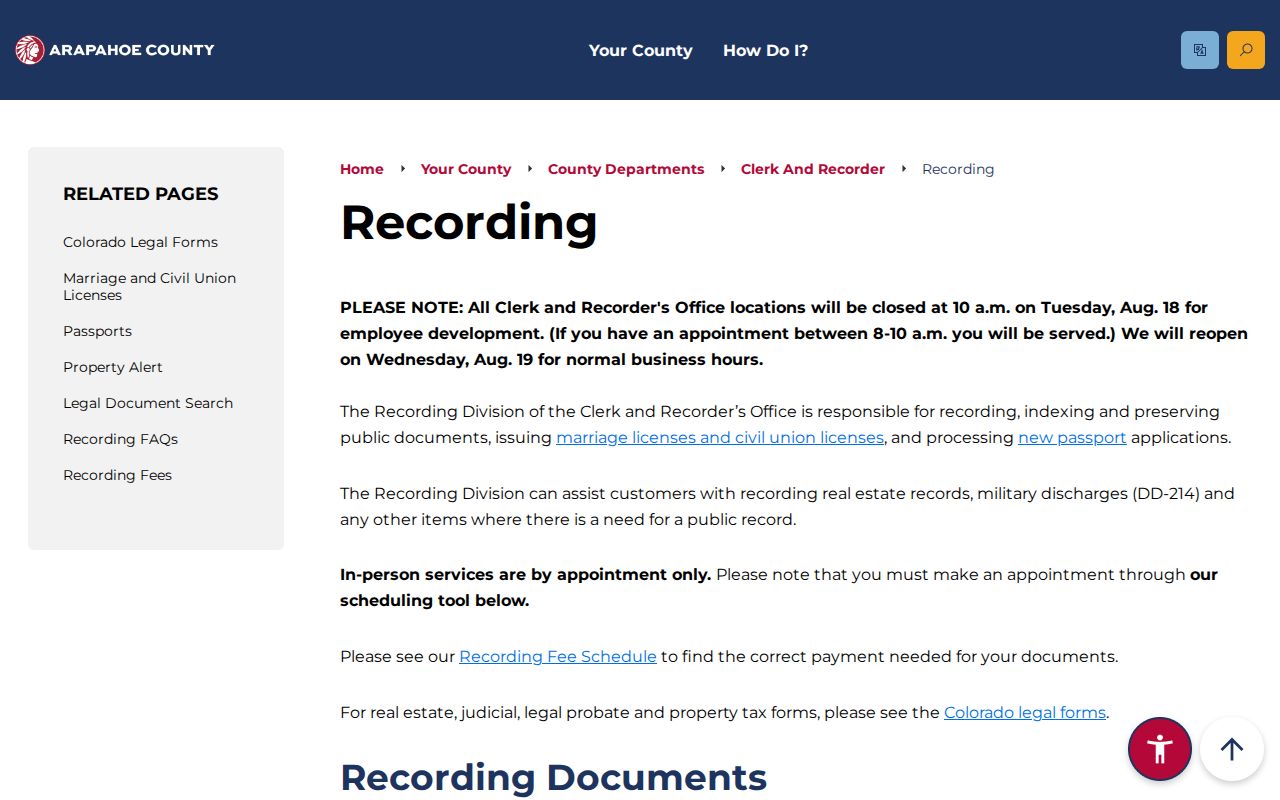
Every recording channel described here still asks for the instrument's type, party role, and date before it returns anything useful. Take parcel and address questions a step further in the Littleton street directory.
Littleton’s City, County, and Postal Footprints
"Littleton" is a slippery word. It can name the incorporated city, a county record area, or simply a USPS mailing place. The city's ZIP code directory spans parts of three counties, so a mailing line alone settles nothing about jurisdiction. Begin with the Littleton Address Wizard, and follow its county parcel link whenever a result falls outside Arapahoe.
Municipal research runs through several city tools. eTRAKiT handles permits, while the rebuilt 2026 Development Activity List, the Map Gallery, and Code Compliance round out the set. The ArcGIS list supports address or project searches. Littleton itself cautions that the list is not comprehensive. Archived permits rest with the City Clerk, reached through permits@littletonco.gov or DRT@littletongov.org.
When a city record never made it online, the Open Records SmartSheet or the printable form works by mail, fax, email, or an in-person visit to 2255 W Berry Ave. State the address, the record type, the date range, the fields you want, and the format you prefer. Bemis and the Museum supply historic color rather than current permit custody.
Searching Littleton Parcels by AIN, PIN, or Address
The Arapahoe Assessor Parcel Search rewards you for arriving with a clue. A parcel identifier or a normalized address works best. AIN is the county's formatted identifier, while PIN stays purely numeric. Address searching covers the number, a range, the street name, and any unit. The assessor offers no owner-name search path. So name-to-parcel work belongs in the recorder index or a formal records request.
| Field | Accepted search input | Practical note |
|---|---|---|
| AIN | Up to 16 characters in 0000-00-0-00-000 form | Keep leading zeroes and hyphens. |
| PIN | Up to 16 numeric characters | State-assessed property needs PIN or AIN. |
| Address Number | Street number | Omit it for a whole-street search. |
| Range | From and to number fields | Useful for a street span. |
| Street Name | At least three characters | No separate direction or type fields. |
| Unit | Unit or suite when known | Review multi-record and multi-situs results. |
| Owner name | No current owner-name path observed | Use the recorder index or the county’s request route. |
Tax Search layers on tax owner, PIN and AIN, situs, value, rate, due dates, exemptions, credits, and detail lines. It proves neither title nor occupancy. ArapaMAP and Location Info add map context, though a representative point or a multipart parcel still needs verification at the assessor.
Access runs wide. Try the assessor counter, 303-795-4600, assessor@arapahoegov.com, or a county records request. The address-change form changes nothing about title. Historic surveys, archives, the Museum, Bemis, and DPL add context for past residents of Littleton and older parcels alike.
Littleton Deed Names and the 1980 Search Line
Arapahoe PublicSearch anchors the county's real-property index. Quick Search takes one term. It matches that term against grantor, grantee, subdivision, document type, or document number. Two recorded-date fields sit alongside quick date ranges. A Real Property context is there too, with a choice of index-only or index-plus-OCR results. The digital-records FAQ spells out Grantor/Grantee name searching from 1980 forward. Deed research in the Littleton residents directory vein often starts there.
When a hit comes back, save the details. Note the reception or document number, the recorded date, and the document type. Capture every party named, plus the legal description or subdivision, and any book/page or image identifier displayed. Read the labels with care. A deed of trust, release, lien, judgment, easement, plat, or license is not a deed. A named party is not automatically a resident of the parcel.
Images may require a free GovOS account. Watermarked downloads were listed as free. Clean copies ran $0.25 per page, and certified copies $1 per document plus $0.25 per page. Anything before 1979 needs a reception number or a Book/Page citation, sent to recording@arapahoegov.com. Kofile's legacy index reaches back to 1860 and stops at 1902. Confirm those older hits with the Clerk and Recorder by counter, appointment, drop box, mail, or eRecording.
Today’s Littleton Residents Directory Sources
Littleton residents directory sources work as separate views, each with its own keeper. The office, not the record, decides who counts. A tax owner, voter, deed party, project applicant, business officer, or mapped association is therefore never automatically a household.
| Source | Role or fields shown | Keeper | Access and limit |
|---|---|---|---|
| Assessor and tax roll | Tax owner, PIN/AIN, situs, value | Arapahoe Assessor and Treasurer | Public portal; not occupancy. |
| Voter lookup and lists | Status, public residence or mailing, party or history fields | Colorado SOS and Arapahoe Elections | Required inputs or public files; protected fields excluded. |
| Recorder index | Grantor, grantee, instrument, date, legal description | Arapahoe Clerk and Recorder | Index public; images have separate access. |
| City permits and development | Applicant, project, parcel, inspections, documents | City of Littleton | Lead only; not a complete permit history. |
| Business and licenses | Entity, agent, filing, license, discipline roles | Colorado SOS and DORA | Public role records; not a home address. |
| Neighborhood and HOA layer | Mapped zone, questionnaire, meeting lead | City-linked resources | Informational; not a recorded covenant. |
Each table row pairs a records source with the question it actually answers. Treat a single clue as tentative. Confirm time and role with a second source before joining anyone to your Littleton residents directory tree.
Colorado Voter Lookup Fields for Littleton
Colorado's Secretary of State runs the Find My Voter Registration lookup. It asks for four things: first name, last name, ZIP, and a birthday in mm/dd/yyyy format. Type the name exactly as it appears in the registration record. A voter who moved may only surface under a prior home ZIP. The result is a registration-status path rather than a full voter file. A blank result does not prove someone never lived in Littleton. The live Colorado voter registration lookup gives the official field path. That path serves a Littleton registration search.
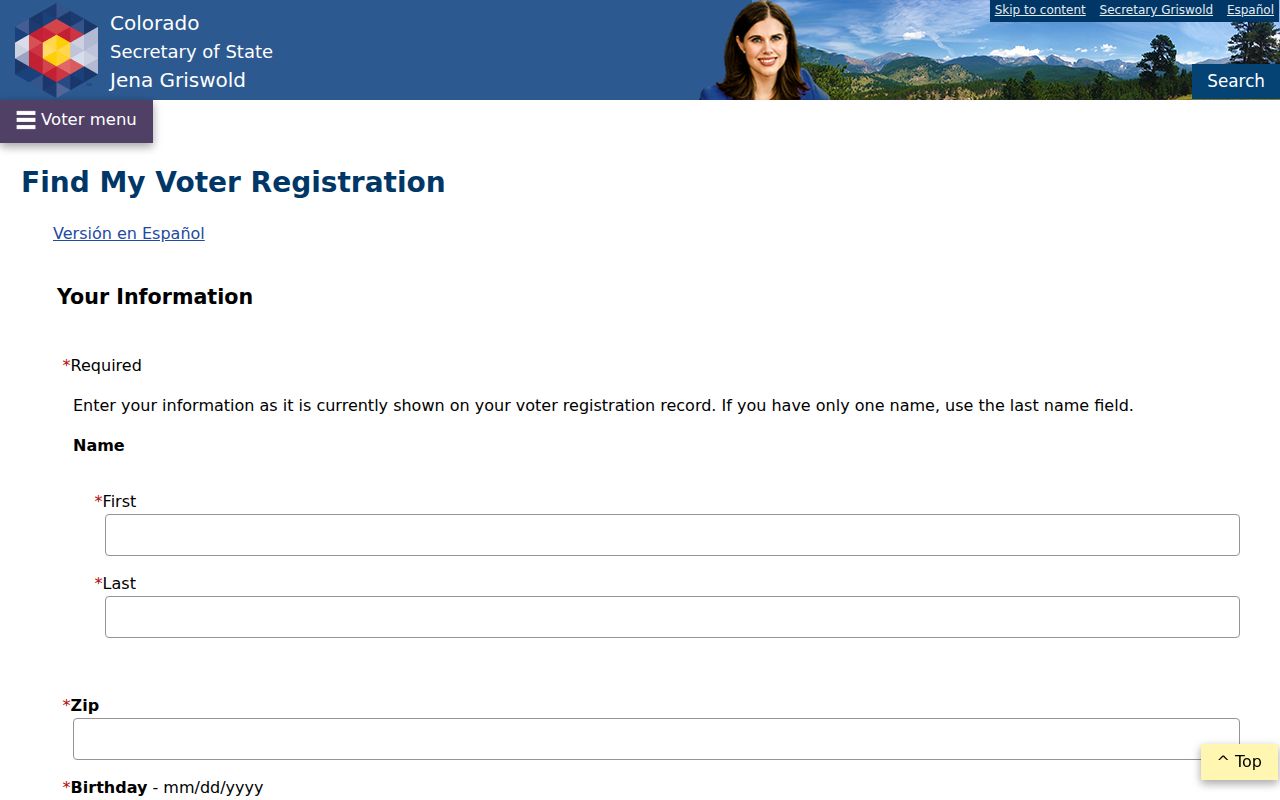
Confidential records and records for anyone under 18 may be left out entirely. When the form fails to settle a legitimate question, County Elections is the escalation point.
Arapahoe posts raw comma-delimited files at no cost and also accepts custom-list requests. Updates run each weekday for the basic file. An EX-002 file listed a May 1, 2026 update. August 28, 2026 is the next date. You can slice by precinct, district, party, status, or election history. Prices stand at $25 for text, $35 for Excel, and $0.25 per printed page. The office takes appointments and answers at elections@arapahoegov.com.
Public lists can carry name, residence or mailing address, status, party, history, voter ID, precinct, and districts. They leave out SSNs, license and ID numbers, signatures, email, and ballot choices. CORA and public-list requests reach public data; the SOS form is the statewide route.
Littleton Court, Jail, and Registry Records
Littleton Municipal Court, the 18th Judicial District, and federal dockets each answer a different question. Detention, DOC, and SOTAR records answer different questions too. Municipal paths work from a citation, license, plate, name plus date of birth, or business name. Colorado Judicial narrows by court, date, case, party, or attorney. Treat any docket as a lead, not a conclusion. The official Colorado Judicial docket search shows the statewide court filter path.
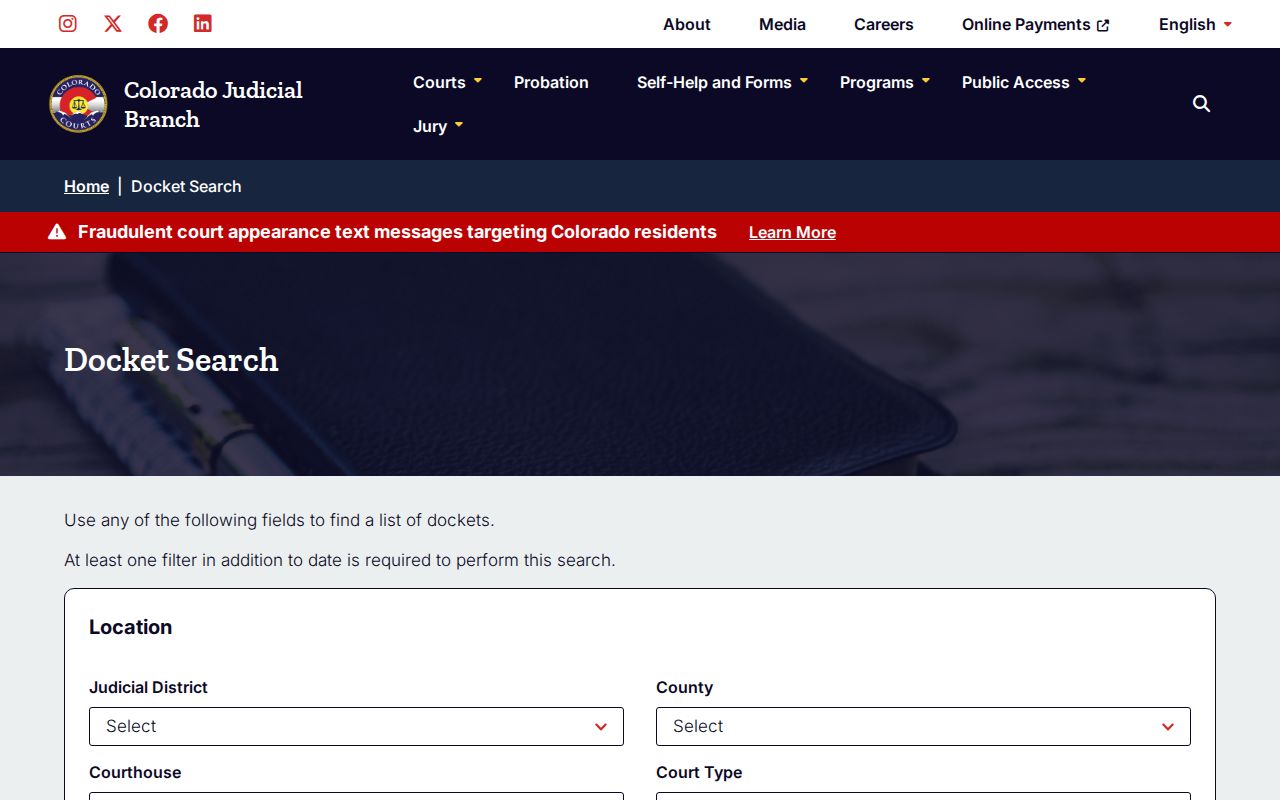
Check the court, case number, party role, and date before assuming anything. Documents and certified copies come from the clerk. Littleton Municipal Court sits at 2069 W Littleton Blvd. It is reachable at 303-795-3837, courtweb@littleton.gov, or fax 303-795-3841. Archives, Arapahoe records, and PACER run on separate tracks, and CORA cannot override court limits. The Arapahoe County detention information page is the official entry point. It covers jail, bond, visitation, mail, and account questions.
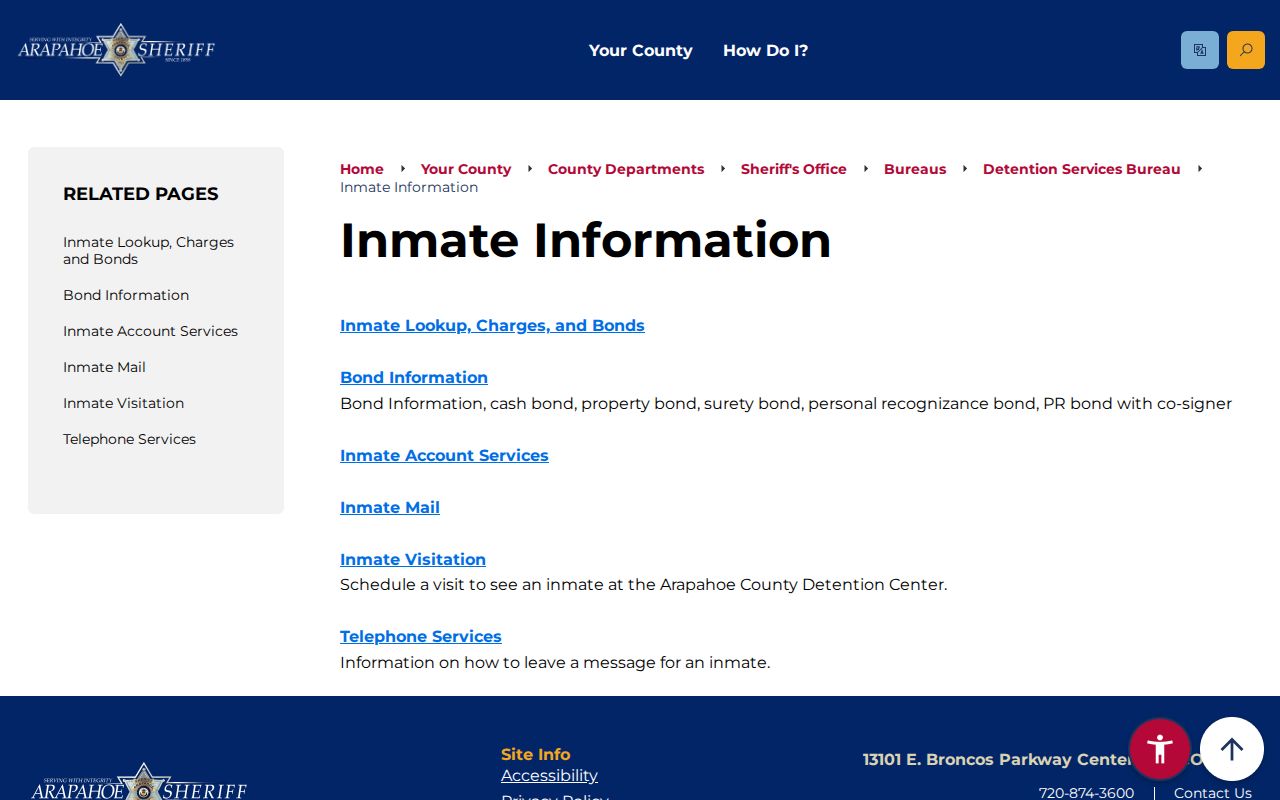
The roster's fields do not render. On the bond page, a search works from a jail ID or a full name plus date of birth. Remember that a jail result is a detention snapshot, not a disposition. Historical bookings, photos, reports, and incident records go through the Sheriff Records Unit and its request portal, whether online, by mail, in person, by phone, or by email. The official Colorado DOC inmate locator is the state-custody route for name or DOC-number searches.
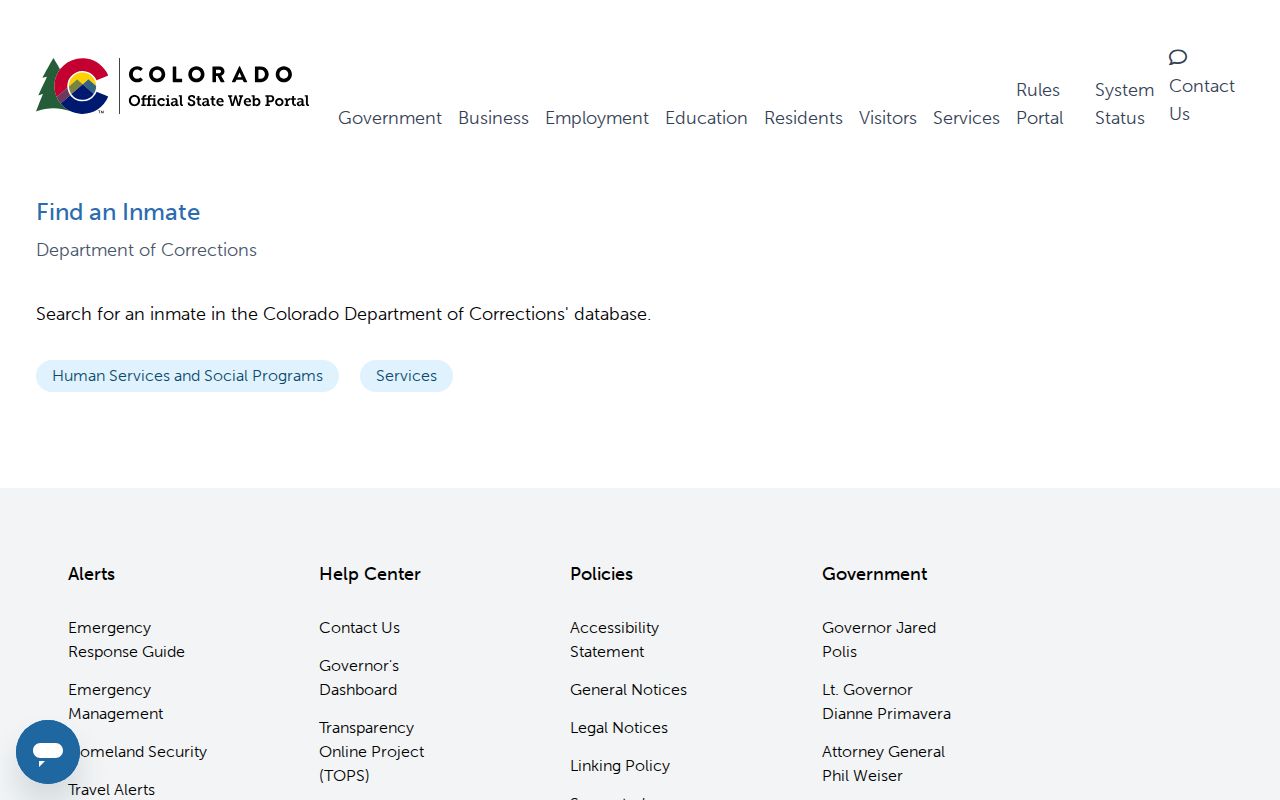
DOC field order and result columns are not fully exposed. For federal custody, turn to the Bureau of Prisons locator instead. And keep perspective: absence from one roster never proves absence from all custody records. The SOTAR public registry searches by jurisdiction, name, or address. It adds an optional radius and email notification.
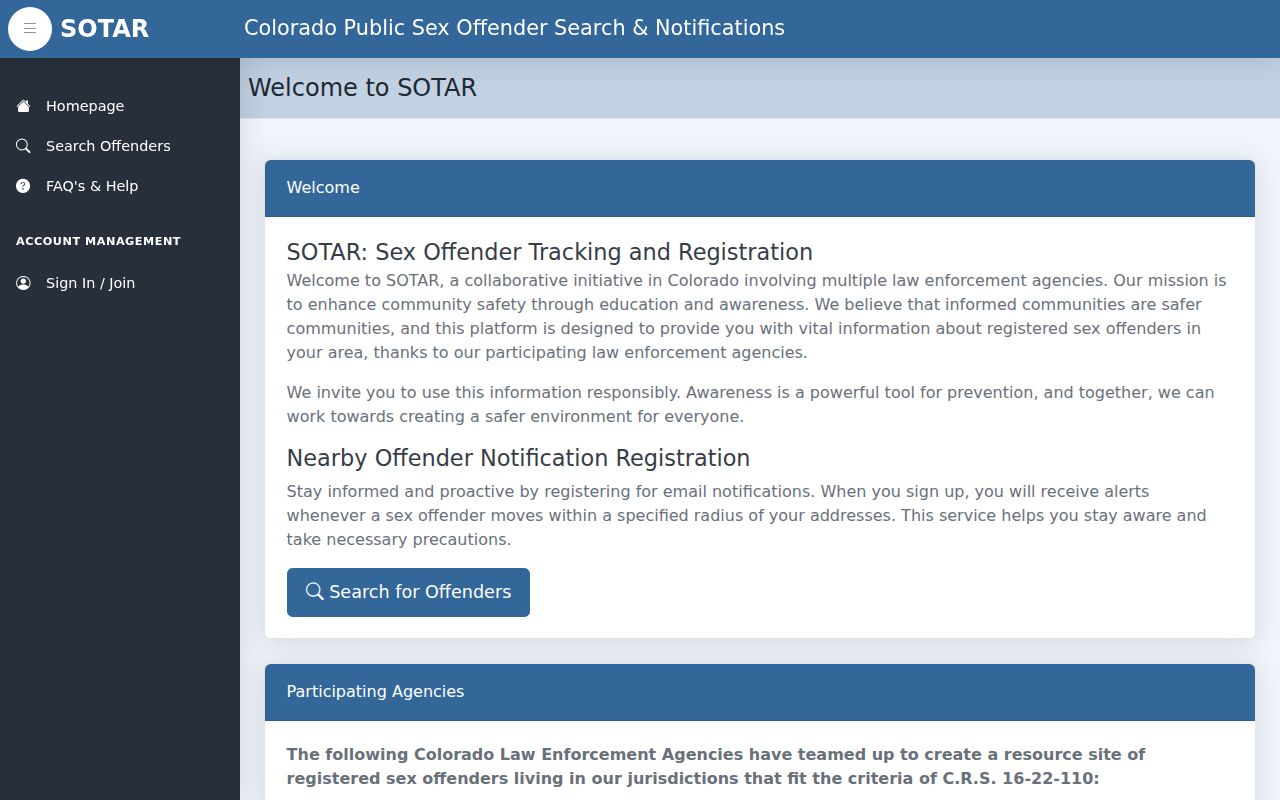
SOTAR itself warns that records are not independently verified. It also warns that map pins can be general or even random. A registry entry is neither a full criminal history nor a precise address. The registry's rules prohibit retaliation, harassment, discrimination, and punishment. When a jurisdiction is not listed, CBI is the fallback.
Littleton Vital Records Have Eligibility Rules
Birth, death, marriage, civil-union, adoption, and divorce records sit behind different doors rather than one shared public search. CDPHE handles birth and death certificates through its vital offices, marriage licenses go through the Clerk and Recorder, divorce cases live with the district court, and older material rests with the State Archives. Vital records stay confidential under C.R.S. §25-2-117, and eligibility, ID, relationship, and fee rules all apply before anything is released.
The CDPHE certificate-order page lays out the state's official online, mail, and appointment channels for an eligible request.
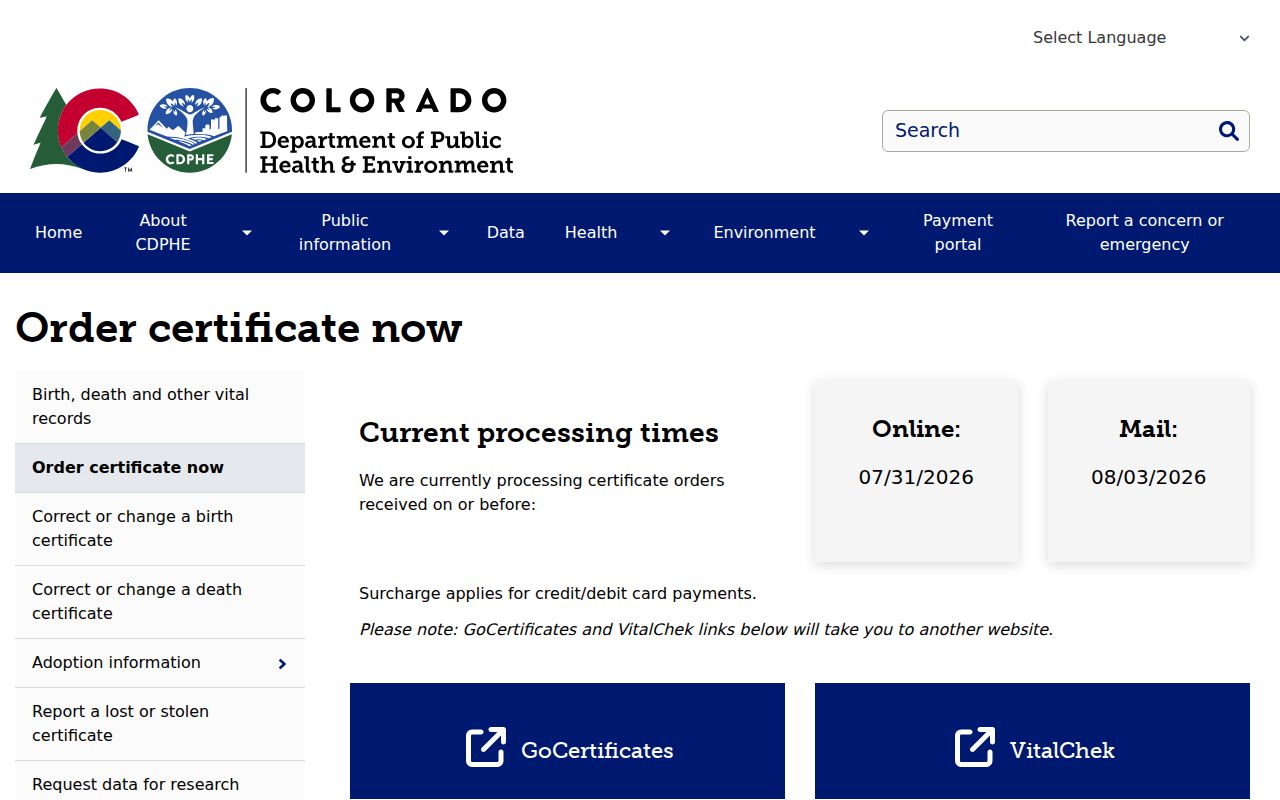
The state route takes about 30 business days, with online card payment, mail applications, ID and eligibility proof, a non-refundable fee, and appointment-only in-person service. Family history requests still use the same application and fee. CORA cannot bypass confidentiality rules.
Archives open other doors. Births become available at 100 years, Arapahoe marriages are listed for 1903 through 1966, and divorce series carry a 100-year restriction. CDPHE publishes no stated release period for post-1908 deaths. Bemis, Columbine indexes, churches, newspapers, and archive staff can help identify a series. Still, a partial index is not a certificate.
Littleton Business and License Records
Business and professional records work as role sources. They can point to an organization, a public filing, or a credential. The Secretary of State search accepts business, trade-name, trademark, ID, and document-number paths. Advanced fields cover name, date, agent, and organization. An entity record can show status, formation date, office, agent, and filing history. None of those roles automatically means a home address. The Colorado Secretary of State business search is the official filing route. Use it for any entity or trade-name question tied to Littleton.
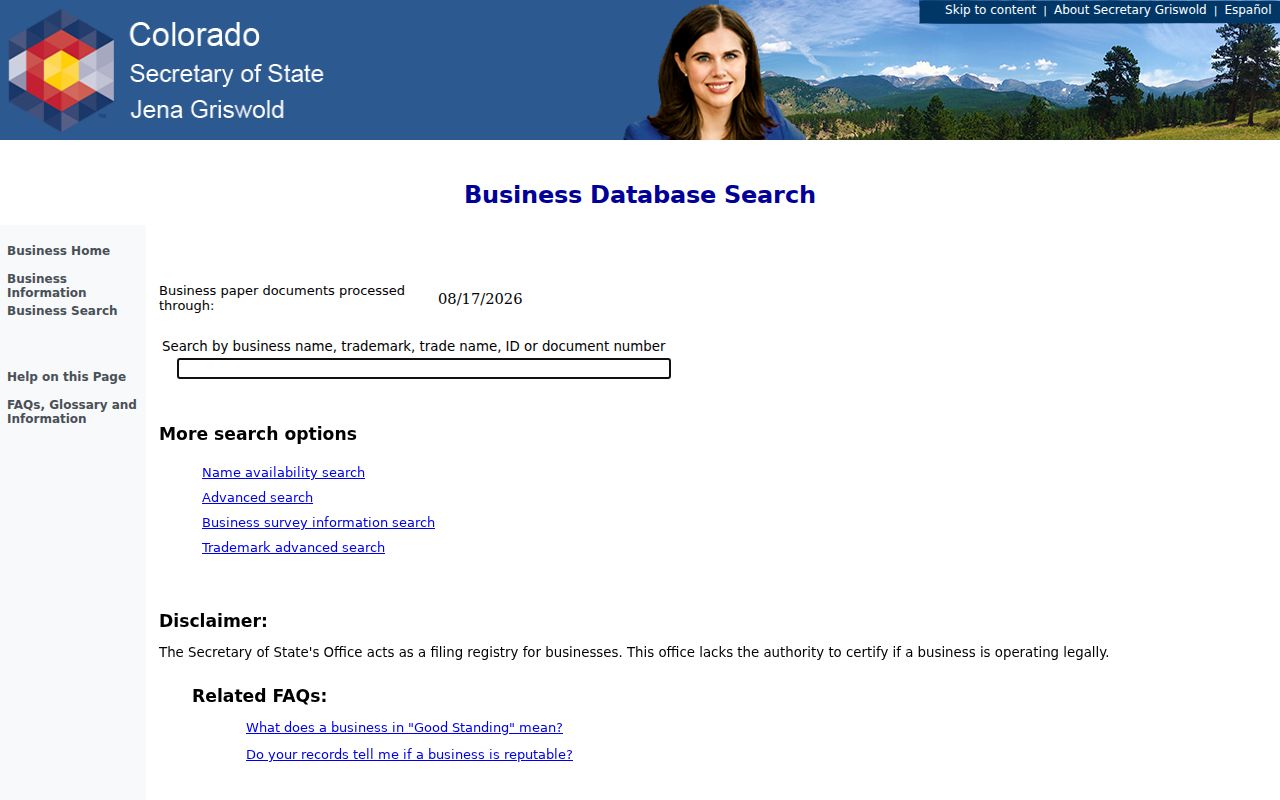
A filing registry will not answer every practical question about current operation or compliance. Keep the entity ID, filing date, and role label handy. Use them when you compare a business against a city permit or a directory entry.
DORA routes to regulated programs whose fields may include licensee, number, profession, status, and discipline. Its dynamic embed shows no universal field order or coverage period. Check the specific program before quoting a result. The Colorado DORA license lookup is the official starting point. It serves any regulated-license question in the Littleton area.
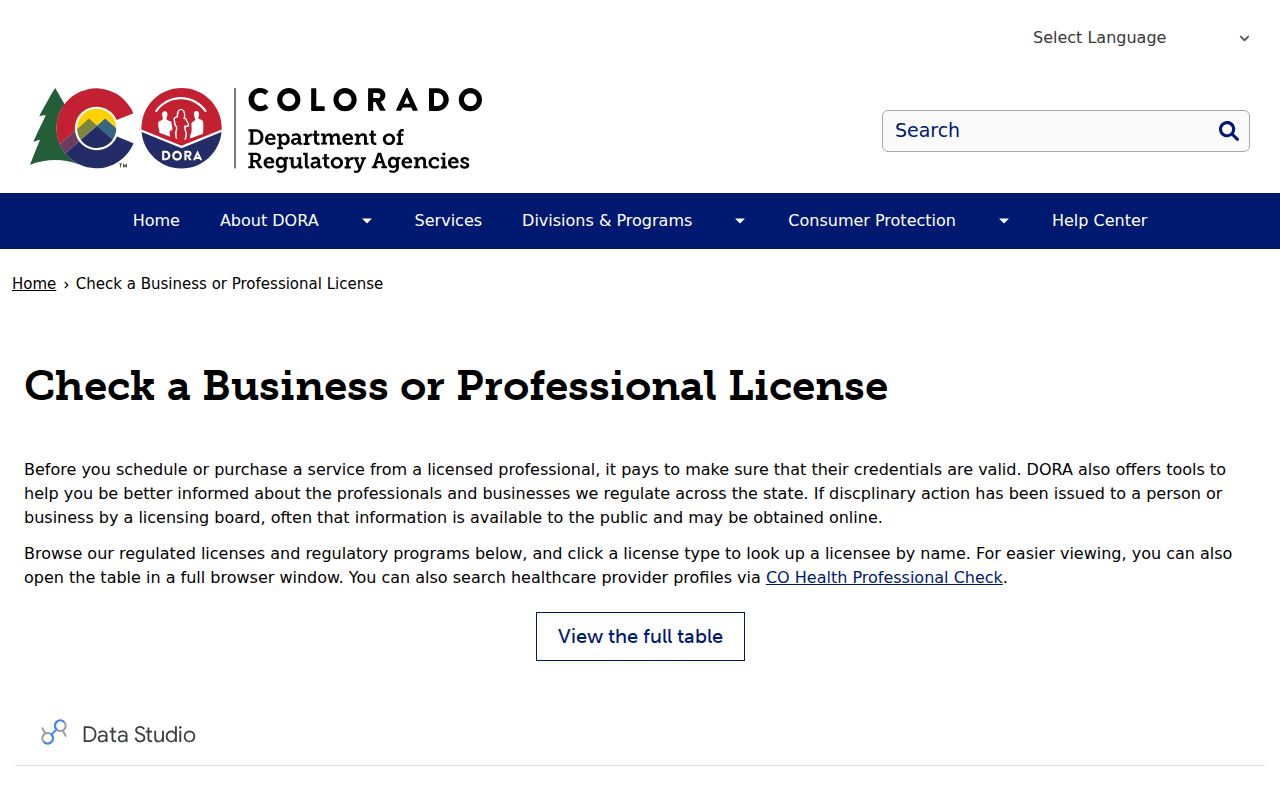
SOS, DORA, and Treasury portals are online channels. Agency offices follow their posted rules. CORA can seek a public filing not shown online, while Bemis, the Museum, directories, and newspapers add history; claims always follow the agency.
Littleton’s Historical Directory Trail
Think of Littleton's historical resident directories as a stack of dated snapshots. It is not one unbroken census. Editions survive from 1905, 1932, and 1939. The city runs cluster later: 1953, 1955, 1957, 1959, 1961, 1962, 1965, 1974, 1976, and 1985. Whole decades sit empty. The 1910s, 1920s, and early 1940s are the thin spots. Street numbers first appear with specific addresses in the 1905 edition. The 1961 grid then renumbered 144 N Lincoln Ave to 5652 S Spotswood St. When you search, try every angle. Use the old street name, the new number, the block, and any nearby landmark. A fuller method lives in the Littleton city directory collections reference.
Access comes from many hands. Bemis, the Museum, Columbine, DPL, the State Archives, digitized newspapers, survey PDFs, and in-person help all hold pieces. City-held files can go through CORA. Library and archive copies follow their own mail, email, ILL, or Society rules. Courier pages span 1900–1909. One entry might describe a household, a boarder, a business, or a mailing address. Weigh it against a parcel or survey before trusting it.
Bemis and Columbine’s Littleton Research Shelf
Bemis Public Library anchors local history in Littleton, with microfilm, genealogy books, clipped files, and staff who know the shelves. Its story is colorful. An 1892 train-wreck fire, Santa Fe aid, and a drugstore reading room mark the early years, followed by roughly 275 books by March 5, 1897, and a 1906 dog-tax appropriation. Carnegie money built a 1917 building. The present Bemis opened in 1965.
The Bemis history page posts 303-795-3961 and hours of Monday through Thursday 9–8, Friday and Saturday 9–5, and Sunday 1–5. Beyond the catalog, the Columbine hub adds obituaries, cemeteries, marriages, mortuary records, church files, surname material, and vertical files. The Littleton Independent obituary index runs only 1970–1973 with scattered 1895–1923 entries. The cemetery index covers 1869–1981 and reports 8,202 records, while the mortuary index spans 1915–1950 with more than 2,000 names. Microfilm also sits at the Museum, DPL, and History Colorado. Copy help at Bemis was quoted at $20, and interlibrary loan can take 2–6 weeks.
What a Littleton Record Role Really Means
Every Littleton record plays a role, and the role sets the limits. A tax owner fills a tax role. A deed party belongs to one instrument and one date. A Littleton residents directory entry is a dated clue, nothing more. A voter row, a court result, or a registered agent each carries its own meaning. None of them alone proves someone lives in Littleton today. Use the role map to pick your next source. Do not settle occupancy on a single hit.
| Route | Strength | Caution |
|---|---|---|
| Official custodian | Role-specific, dated source or request path | May omit protected, unindexed, or restricted material. |
| Commercial people-finder category | May combine public data into a paid summary | Not the custodian; coverage, freshness, and identity fit can be unclear. |
- Roll
- A property or tax list for assessment and billing. Its owner name is not proof of occupancy.
- Index
- A finding aid pointing to a record or result. An entry is not the full image or a certified copy.
- Criss-cross directory
- A reverse directory organized by address. Entries and abbreviations depend on the edition.
- Parcel
- A mapped property unit with a county identifier. It can have multiple situs records or units and is not a household.
Matching works best with two fields, one time, and one role in agreement. Join a parcel to recorder work. Pair a directory year with a survey, map, obituary, church index, or newspaper item. Request a certified copy whenever proof matters.
Littleton Lookup Privacy and Lawful Use
Colorado treats each record type differently. CORA and CCJRA requests can reach public material. But only the right custodian can release it, and exemptions, court rules, redactions, and confidentiality programs still apply. The Colorado Privacy Act covers a qualifying consumer's own data. The Address Confidentiality Program and voter protections can hide an actual residence. They can also shield precinct details from public view.
Lawful personal use. Public records may support family history, civic research, or a personal property question. Do not use a record to stalk, harass, intimidate, or expose a protected address, and follow the custodian’s access rules.
Vital, juvenile, sealed, adoption, protected voter, and law-enforcement records may be closed or only partly releasable. Keep a note of each source date. Omit sensitive identifiers and protected addresses, and read a redaction as a boundary rather than a puzzle to solve.
A Littleton County-Seat Story in the Records
Littleton's record geography has a civic story behind it. The plat was filed in 1872, and the city incorporated in 1890 with 245 people. A 1904 vote followed the 1902 county division. It defeated Englewood 1,310–829. That fixed Littleton as the permanent county seat. The courthouse followed in 1908. Museum history supplies those dates. Questions belong with the Clerk and Recorder, Assessor, Elections, or the courts. Early directories lack street numbers. Archive series have gaps, and name indexing may only begin in 1980. No courthouse disaster appears in any source, so a missing image proves nothing about destruction.
Littleton’s 2026 Portal and Hours Check
The Arapahoe Clerk and Recorder locations page lists new branch hours effective January 1, 2026. The hours are 8:00 a.m.–4:00 p.m. Appointments and red drop boxes are also listed. An older recording page still shows 7:00 a.m.–4:00 p.m. Trust the current locations page. Mail, eRecording, and phone or email contact each stay separate. Littleton's Development Activity List became an ArcGIS experience in 2026. It searches by address, project, parcel, document, and meeting. Coverage is not comprehensive. Voter file dates shift too, so note the download date. On August 17, 2026, Colorado Judicial warned about fraudulent court texts. The texts carried generic names, missing hearing details, fake case patterns, and non-official links. Verify anything through the docket or clerk. Note: Confirm hours, fees, and coverage with each office before making requests.